Tag Archive for: food

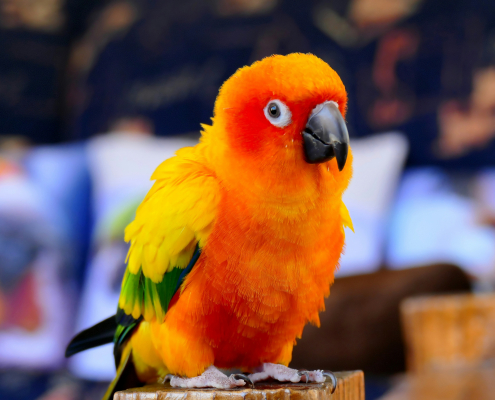
In 2022, Greg James hosted a fun debate about a viral video from Chile, where a news anchor was reporting live on a robbery when a parakeet landed on his shoulder and stole his earpiece. Greg invited two listeners to argue whether the moment was staged or simply a cheeky bird being itself.

We messaged in and ended up taking part on the “cheeky parakeet” side of the debate. On the other side was an expat Chilean, who argued that the stunt was set up for publicity and that Chileans are just as cheeky!

I’d like to think I convinced Greg that this behaviour is actually typical of parakeets—naturally curious birds that love to investigate and take interest in anything they can grab, chew, or “destroy.” We’ll try to find the clip so you can decide for yourself… LOL.

Making the switch to a non-toxic lifestyle can feel overwhelming at first—especially when you’re responsible for the health and safety of sensitive animals like parrots. Birds, in particular, have delicate respiratory systems, which makes them far more vulnerable to airborne chemicals, synthetic fragrances, and everyday household toxins.

At Parrots and Friends, we believe creating a safer home doesn’t require a complete overhaul overnight. Instead, it’s about making gradual, informed choices that reduce exposure to harmful substances while maintaining a clean and comfortable environment for both you and your pets.


Why Non-Toxic Living Matters for Parrot and Pet Owners

Parrots are highly sensitive to their surroundings. Common household items such as cleaning sprays, air fresheners, candles, and even certain cookware can release fumes or residues that may affect their health.

Unlike humans, birds have a more efficient respiratory system, meaning they absorb airborne particles more readily. This makes them particularly susceptible to toxins that may otherwise seem harmless in a typical home.

Non-toxic living isn’t just a trend—it’s a practical step toward protecting your pets’ long-term wellbeing.

Discover how to begin switching to a non-toxic lifestyle for your home, with simple, practical steps to protect the health and wellbeing of parrots and pets.

Step 1: Reassess Your Cleaning Products

One of the easiest and most impactful places to start is with your cleaning routine.

Many conventional cleaning products contain:

  • Synthetic fragrances

  • Harsh disinfectants

  • Volatile organic compounds (VOCs)

  • Aerosol propellants

These can linger in the air and on surfaces, creating an environment that isn’t ideal for parrots or other small animals.

A better approach is to opt for plant-based, biodegradable cleaning solutions that avoid unnecessary chemicals. In our own home, we use products from Purdy & Figg, whose environmentally conscious cleaning concentrates are designed with simpler, naturally derived ingredients and essential oil-based scents.

Step 2: Improve Ventilation

Fresh air is one of the most underrated tools in non-toxic living.

Whenever you clean or use any household products:

  • Open windows where possible

  • Allow rooms to air out before letting birds back in

  • Avoid using strong products in enclosed spaces

Good ventilation helps disperse any lingering particles and keeps your environment healthier overall.

Step 3: Rethink Air Fresheners and Fragrances

Artificial air fresheners, plug-ins, and scented sprays often contain chemicals designed to linger in the air for long periods. For parrots, this constant exposure can be problematic.

Instead of masking odours, focus on:

  • Regular cleaning routines

  • Natural airflow

  • Minimising the use of synthetic fragrances

If you enjoy scent in your home, choose products that use naturally derived ingredients and use them sparingly, always ensuring your birds are not directly exposed.

Step 4: Be Mindful of Kitchen Products

Non-toxic living also extends into the kitchen. Consider:

  • Non-stick cookware (which can release fumes when overheated)

  • Food storage materials

  • Dishwashing products

Choosing safer materials and gentle, residue-free cleaning options helps reduce the risk of harmful exposure in one of the most frequently used areas of the home.

Step 5: Create Bird-Safe Zones

Designating safe spaces for your parrots can make a big difference. Keep their living and play areas:

  • Away from cleaning activity

  • Free from strong scents or sprays

  • Well-ventilated and calm

This ensures they have a consistent environment that supports their health and comfort.

At Parrots and Friends, we’re committed to sharing practical, real-world guidance to help you build that environment with confidence.

  • Donec posuere vulputate arcu.
  • Phasellus accumsan cursus velit.
  • Vestibulum ante ipsum primis in faucibus orci luctus et ultrices posuere cubilia Curae;
  • Sed aliquam, nisi quis porttitor congue

Read more
Aromatherapy is a topic that often sparks interest among parrot owners looking for natural ways to support wellbeing in the home. One voice that is frequently referenced in this space is Angela Nelson, who has shared guidance on how essential oils and aromatic practices should be approached with caution, awareness, and respect for a bird’s sensitive physiology.

In this blog, we’ll explore the key themes behind her recommendations and how parrot owners can apply a mindful, safety-first approach when considering aromatherapy in a home with birds.

Understanding Parrots and Sensitivity to Scents

Parrots have highly efficient respiratory systems, which means they are far more sensitive to airborne substances than humans. According to Angela Nelson’s approach, this sensitivity should always be the starting point when considering any form of aromatherapy.

Rather than focusing on scent as a therapeutic tool in the air around birds, her guidance emphasises minimising exposure and prioritising environmental safety above all else.

The Importance of Caution with Essential Oils

A core principle in Angela Nelson’s recommendations is that essential oils should never be used directly around parrots without extreme care and understanding.

Key considerations include:

  • Avoiding direct diffusion in the same room as birds

  • Preventing inhalation of concentrated vapours

  • Ensuring birds are not confined in environments where oils are actively dispersed

  • Being aware that some oils may be more irritating than others

Her overall stance encourages parrot owners to treat essential oils as potentially powerful substances that must be handled with restraint in avian environments.

Indirect Use and Environmental Awareness

Rather than promoting aromatherapy as a direct treatment for parrots, Angela Nelson’s perspective leans toward indirect, human-focused use with strong environmental awareness.

This includes:

  • Using aromatic products in areas well away from birds

  • Ensuring proper ventilation at all times

  • Allowing sufficient time for scents to dissipate before reintroducing birds to the space

  • Prioritising natural airflow over masking odours with fragrances

The emphasis is not on introducing scent into a parrot’s immediate environment, but on maintaining a clean, well-ventilated home where exposure is minimal.

Prioritising the Bird’s Wellbeing Above All

A consistent theme in Angela Nelson’s recommendations is that the wellbeing of the parrot should always take precedence over lifestyle preferences.

For many parrot owners, this means:

  • Choosing low-toxicity or fragrance-free products

  • Reducing reliance on strong scents in general

  • Observing birds closely for any signs of sensitivity or stress

  • Avoiding assumptions that “natural” automatically means safe in all contexts

Her guidance encourages a balanced, informed approach rather than a blanket endorsement of aromatherapy use around birds.

A Mindful Approach to Natural Living

For parrot owners interested in creating a more natural home environment, Angela Nelson’s perspective supports a philosophy of moderation, awareness, and precaution.

Instead of heavily incorporating aromatherapy into spaces shared with parrots, the focus is on:

  • Creating clean air quality

  • Minimising exposure to airborne substances

  • Maintaining simple, consistent home environments

  • Respecting the unique biology of parrots

Final Thoughts

Aromatherapy can be appealing as part of a natural lifestyle, but when it comes to parrots, safety and sensitivity must guide every decision. Angela Nelson’s recommendations highlight the importance of caution, ventilation, and informed choices rather than direct application of aromatic practices around birds.

For parrot owners, the key takeaway is clear: a mindful, low-exposure environment is far more beneficial than introducing fragrances into a space shared with these highly sensitive animals.

To learn more about Angela Nelson’s recommendations and uses in aromatherapy for parrots we recommend you read her book AROMATHERAPY FOR PARROTS the ancient healing methods in today;s companion birds.

Why We Chose to Build a Sanctuary

Over time, we began to see a recurring theme in the lives of many parrots—repeated rehoming, lack of understanding from owners, and environments that didn’t meet their physical or emotional needs. Parrots are long-lived companions, with some species living for decades. Without the right care, they can experience stress, behavioural challenges, and in some cases, neglect. Inspired by the need for better outcomes, we felt a responsibility to create something more lasting. Our vision became clear: to build a sanctuary where parrots (and other animals) can live safely, freely, and with dignity.

From Rescue to Long-Term Care

Our work has always been rooted in rescue and rehabilitation. Over the years, we’ve taken in parrots and other animals that needed a second chance—each with their own story, personality, and set of needs. Rescue is only the beginning. True sanctuary means:
  • Providing lifelong care where needed
  • Creating stable, low-stress environments
  • Offering enrichment and social interaction
  • Understanding each animal as an individual
We’ve seen how transformative the right environment can be. With patience, consistency, and care, many animals begin to relax, trust, and express their natural behaviours again.

Creating a Safe and Enriching Environmen

A sanctuary is more than just a physical space—it’s an ecosystem designed around the wellbeing of its residents. For parrots in particular, this includes:
  • Spacious, secure aviaries
  • Opportunities for flight and exploration
  • Mental stimulation through toys, foraging, and interaction
  • Routine and predictability
  • Clean, well-ventilated living conditions
These elements all contribute to a more natural and fulfilling life, allowing birds to behave as birds rather than simply exist in captivity.

The Reality of Building a Sanctuary

Building a sanctuary is not just a passion project—it’s a long-term commitment that requires planning, resources, and community support. There are many moving parts:
  • Securing suitable land
  • Designing safe housing and aviaries
  • Meeting ongoing care costs (food, veterinary care, utilities)
  • Managing daily operations and long-term sustainability
Like many sanctuaries and rescue organisations, we are navigating the challenges that come with rising costs and the need for consistent funding. This is why building awareness and support is such an important part of our journey.

A Vision for the Future

Our goal is to create a sanctuary that not only provides a permanent home for animals in need but also serves as a place of education and awareness. We want to:
  • Help more people understand the needs of parrots
  • Share knowledge about responsible care and non-toxic living
  • Encourage more thoughtful decisions around pet ownership
  • Inspire a deeper respect for animals and their wellbeing
In many ways, the sanctuary is as much about people as it is about animals—bridging the gap between understanding and action.

Why This Matters to Us

Every step we take toward building this sanctuary is driven by the animals themselves—their resilience, their personalities, and their ability to form deep bonds when given the chance. We’ve seen first-hand how much difference a safe, stable environment can make. A sanctuary represents hope: for animals that need somewhere to land, and for people who want to make a meaningful difference.

Join Us on the Journey

This is only the beginning of our story. Building a sanctuary is a long-term vision, and we are committed to growing it thoughtfully and responsibly. Whether through awareness, support, or simply sharing our mission, every bit helps move us closer to creating a lasting haven for parrots and other animals in need. Together, we can build something truly meaningful—a place where animals are not just cared for, but understood, respected, and given the opportunity to thrive.

At Parrots and Friends, our story began long before we ever imagined creating a sanctuary. It started with a deep, lifelong connection to parrots—over 20 years of living alongside these intelligent, emotional, and incredibly complex birds, and learning first-hand what they truly need to thrive. To help us and donate please click on our home page and click the HELP US AND DONATE button.

What we’ve come to understand is simple, yet powerful: parrots are not just pets—they are sentient beings that require time, understanding, space, enrichment, and above all, a safe and stable environment.

Our journey to building a sanctuary has been shaped by this understanding, along with our growing commitment to rescue, rehabilitation, and long-term care.

Where We Found Them

While working in Devon, we came across a friendly Amazon parrot that was being advertised for sale by a couple who could no longer care for her. Due to complaints from neighbours, they were also asked to rehome her.

We kept an eye on her listing and noticed that, despite some time passing, she still hadn’t found a home. Feeling concerned, we reached out to the owners and arranged to meet her in person.

The moment we met her, we fell in love. She was loud, full of personality, incredibly friendly, and delightfully mischievous—everything you’d expect from an Amazon parrot.

We couldn’t leave her behind, so we made the decision to welcome her into our home.

Not long after, we learned about another Amazon in need of a home. Wanting her to have a companion, we decided to take him in as well. We affectionately named him “the Welshman”—his chatter is so distinctive, you’d think he’s speaking Welsh!

Care and Life With Us

Since 2020, these two characters have thrived in our care. Initially, they were housed inside the home alongside Bubba, who was very much an early riser and had no hesitation in ensuring the entire household was awake by 5:45am!

As our flock grew, we built outdoor aviaries to provide our birds with more space, enrichment, and the opportunity to experience a more natural environment. This allowed them to explore, move freely, and, where possible, develop their flight.

We eventually moved them into one of our larger aviaries, where they continue to live happily—enjoying space, routine, and the companionship of their surroundings.

Tag Archive for: food